About UAE for Expats
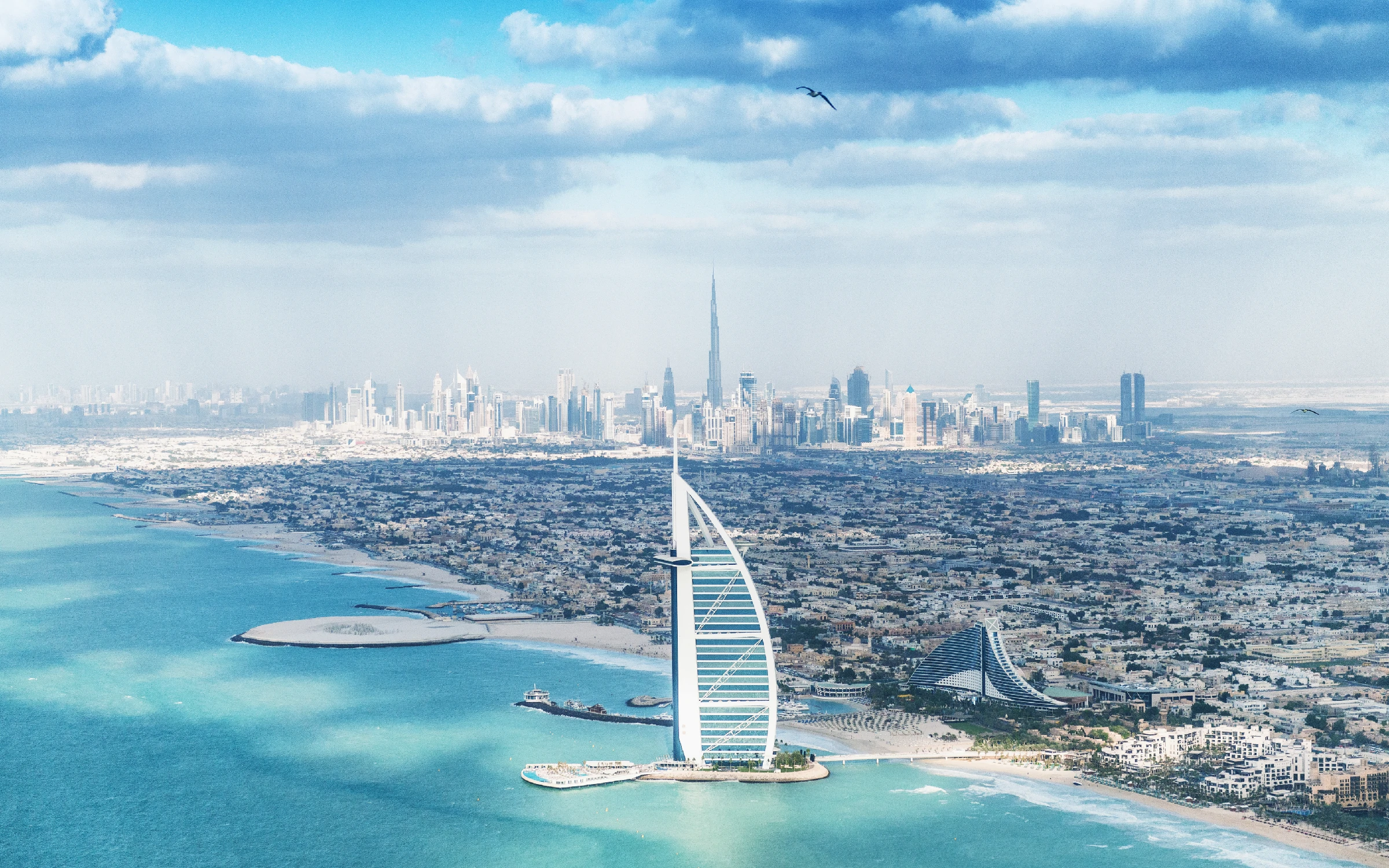
The United Arab Emirates (UAE) is one of the world’s most sought-after destinations for expatriates, offering a dynamic lifestyle, world-class infrastructure, and a wide range of career and business opportunities across various industries. Home to millions of residents from different nationalities and cultural backgrounds, the UAE has built a reputation as a global hub where people from around the world can live, work, and thrive together. With its modern cities, excellent transportation networks, high-quality healthcare and education systems, and commitment to innovation, the country provides a comfortable and convenient environment for individuals and families alike.
Reasons for Selecting UAE as Your Destination
Safety is a cornerstone of the Croatian lifestyle. The country consistently ranks among the absolute safest nations globally, maintaining incredibly low crime indexes. It is one of the few European destinations where solo travelers and families can comfortably and securely walk through any major urban hub at any hour of the night.

Income Benefits
Tax-free personal income allows you to maximize earnings while enjoying a high standard of living.
Safety & Stability
Low crime rates, modern infrastructure, reliable public transportation, and access to world-class shopping, entertainment, and cultural attractions.
Career Opportunities
As one of the world’s leading economic hubs, the country continues to experience growth across a multitude of industries.
Special Economic Zones in UAE
UAE is home to more than 40 specialized Free Zones (also known as Special Economic Zones), each designed to attract foreign investment, encourage innovation, and support business growth across different industries.
Jebel Ali Free Zone (JAFZA) – Dubai
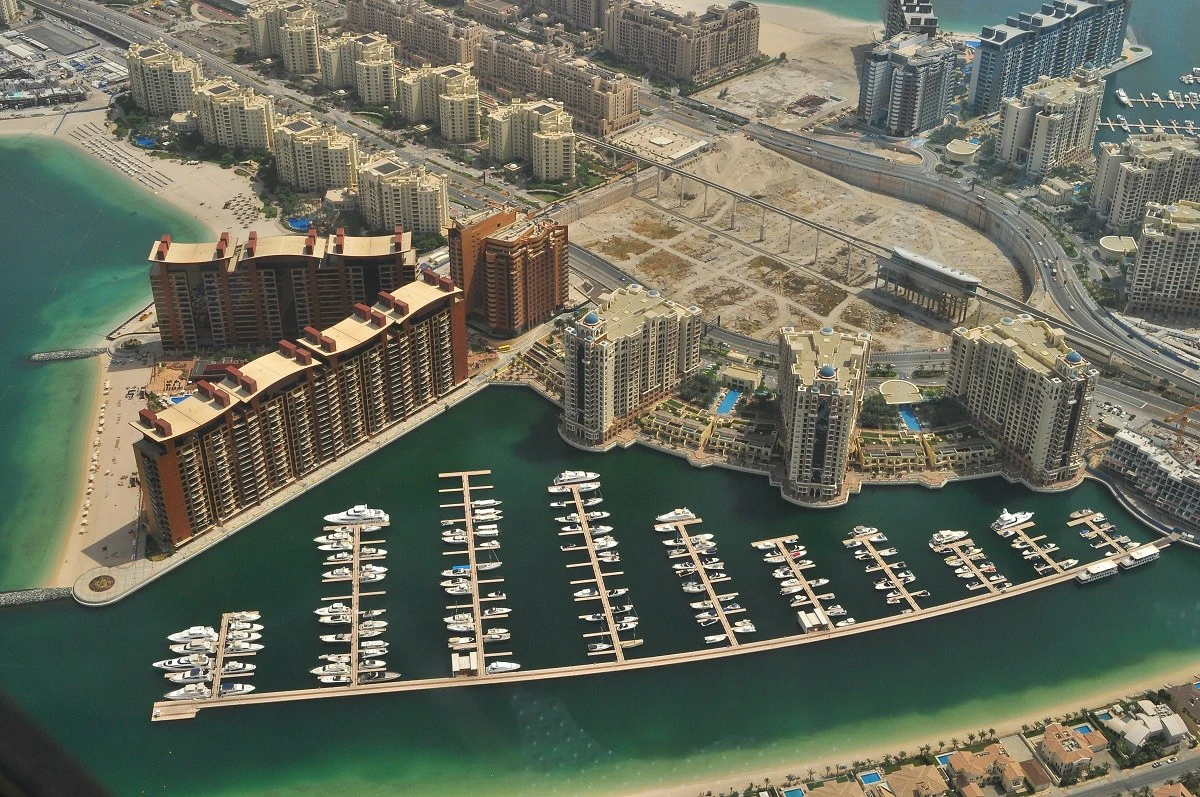
Home to thousands of multinational companies operating in logistics, manufacturing, e-commerce, healthcare, automotive, and consumer goods.
Dubai Multi Commodities Centre (DMCC) – Dubai
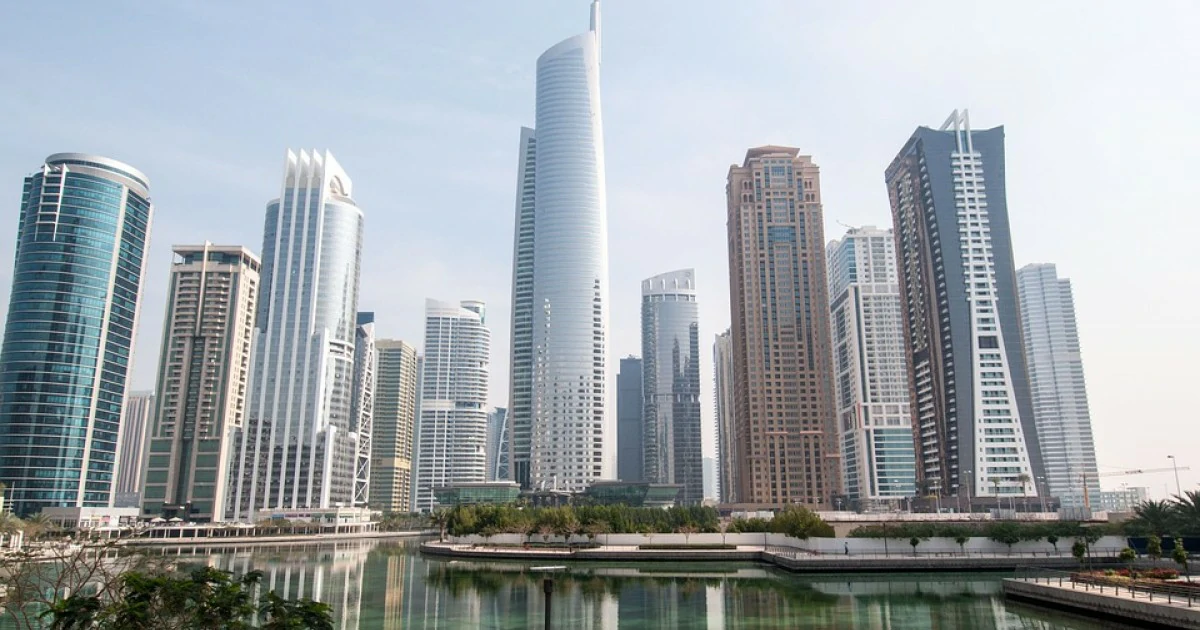
Today, DMCC is recognized as one of the world’s premier free zones and is home to tens of thousands of businesses from around the globe.
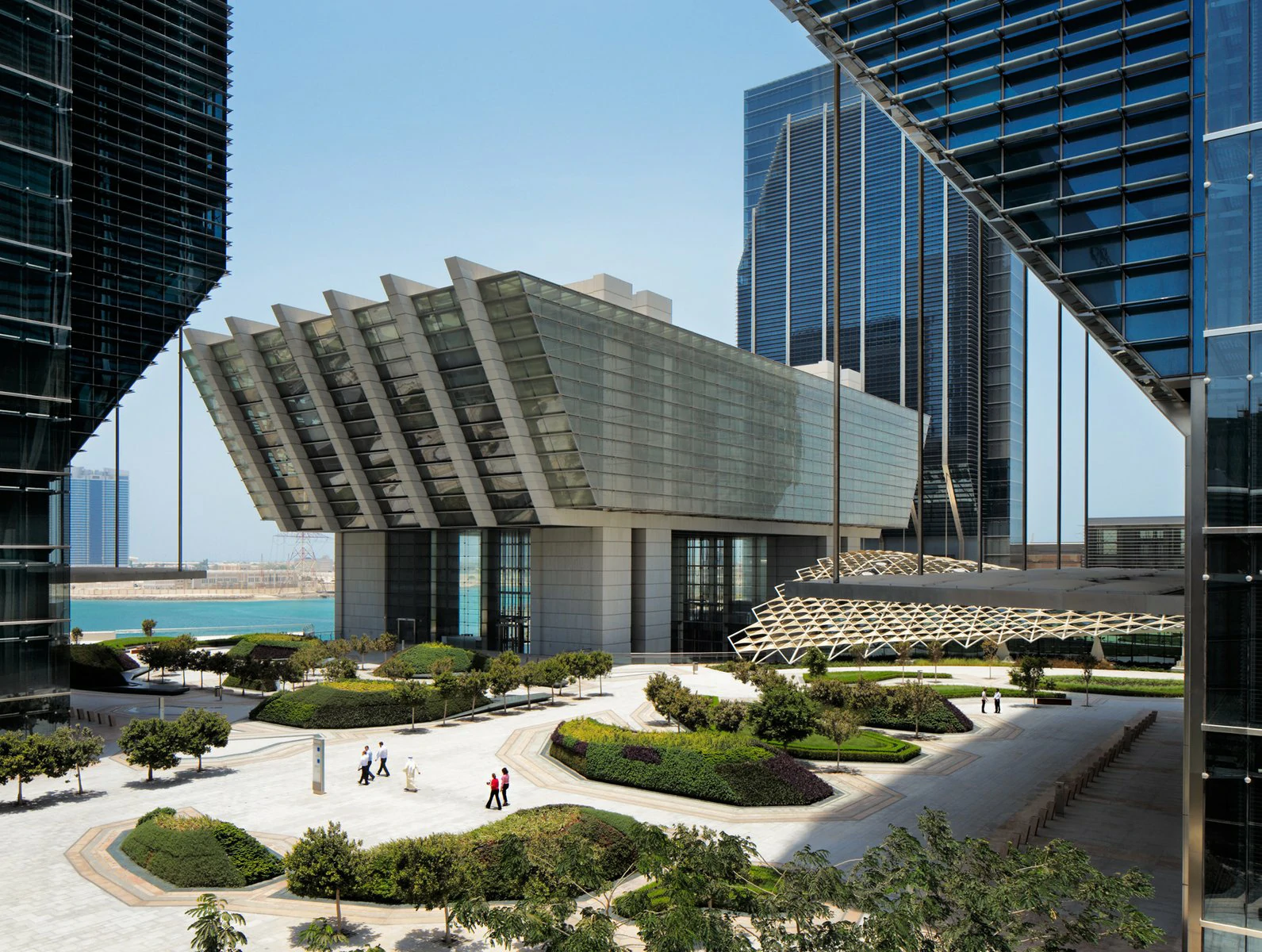
Abu Dhabi Global Market (ADGM) – Abu Dhabi
An international financial center specializing in banking, investment management, fintech, legal services, and wealth management.
Preparing for Your Move to UAE
Before your move, it’s important to ensure that all required documents are complete and up to date. This includes securing the appropriate visa, verifying the validity of your passport, gathering educational and professional certificates, arranging health insurance, and understanding your employment contract or sponsorship requirements. Researching your destination city, cost of living, transportation options, and housing will also help you make informed decisions before you arrive.
Financial preparation is equally important. Setting a realistic budget for your first few months, opening a local bank account when eligible, and understanding everyday expenses such as accommodation, utilities, transportation, and groceries will make your transition much easier. Familiarizing yourself with the UAE’s laws, local customs, and cultural etiquette can also help you adapt more quickly while showing respect for the country’s traditions and values.

Business Setup Options in the UAE
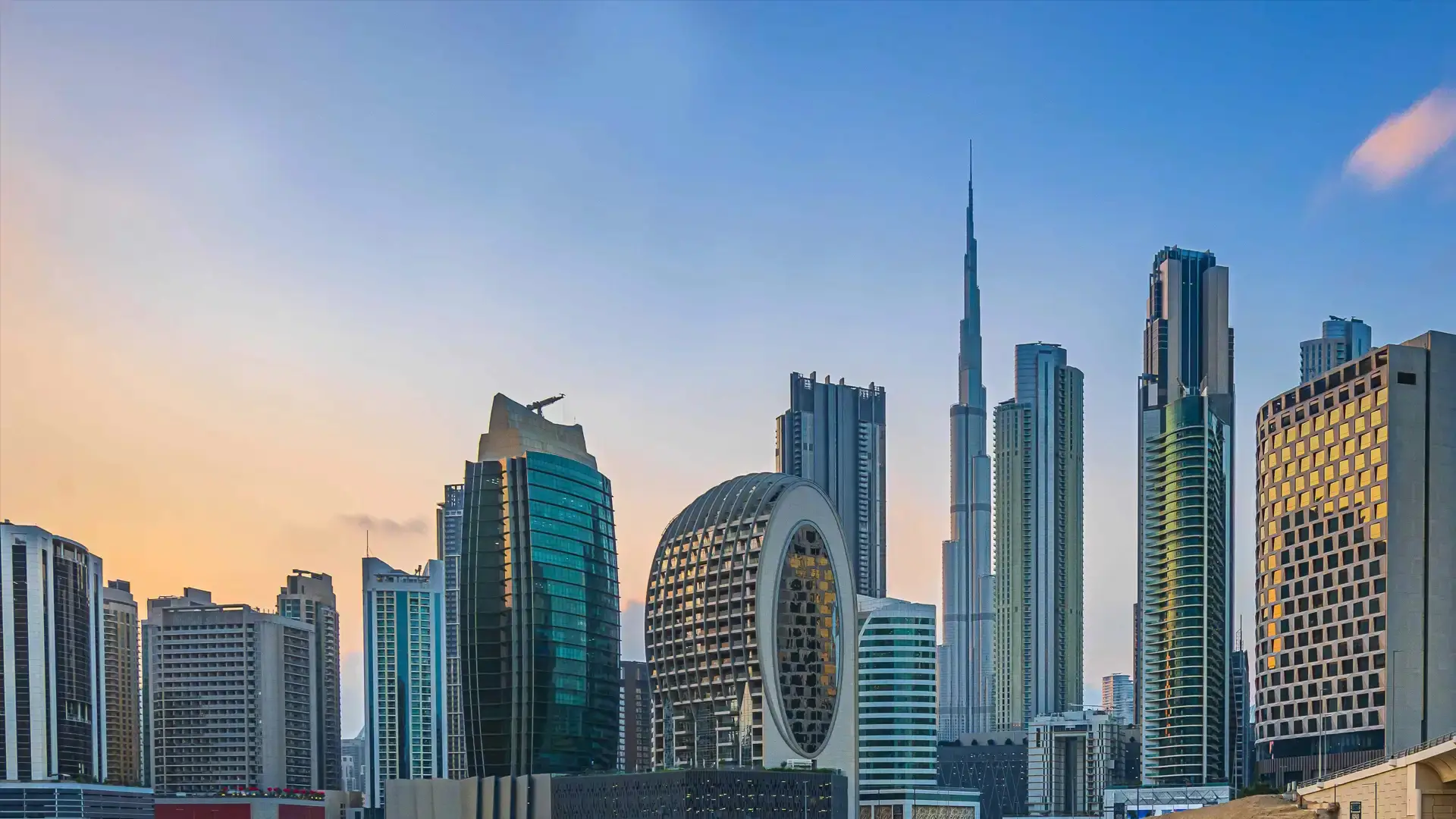
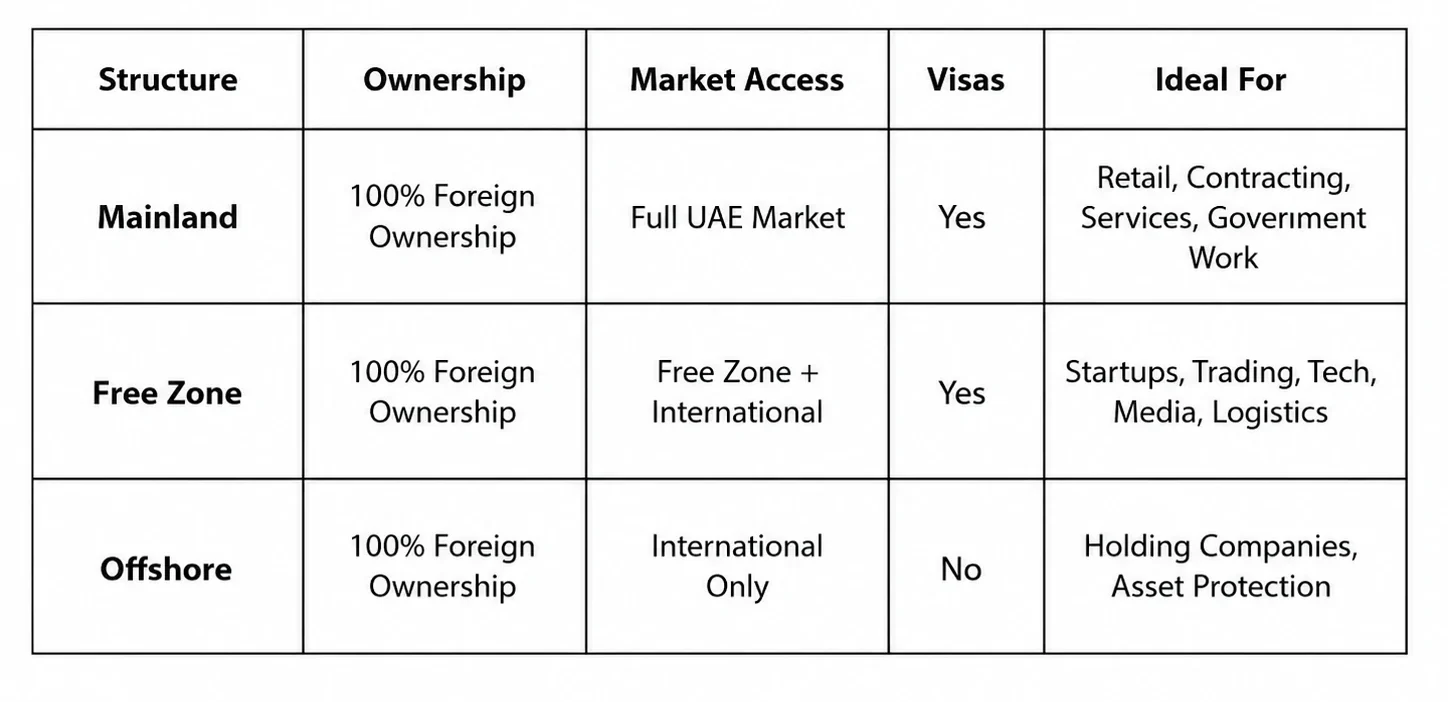
Mainland (Onshore) Companies
Mainland companies are licensed by the Department of Economic Development (DED) of each emirate and allow businesses to operate anywhere within the UAE and internationally.
Key Features
- 100% foreign ownership permitted across most activities (commercial, industrial, and professional).
- No restrictions on business location—companies can trade freely within the UAE market.
- Ability to work with government entities and participate in public tenders.
- Office space requirement: Physical office or flexi-desk required depending on activity.
- Regulated by UAE Federal Laws and the respective emirate’s DED.
Ideal For
- Companies targeting the UAE market.
- Service providers, retail businesses, contracting firms, and companies requiring government contracts.
Free Zone Companies
Free zones are designated economic areas offering incentives to foreign investors. The UAE hosts more than 45 free zones, each specializing in sectors such as technology, media, logistics, finance, and manufacturing.

Key Features
- 100% foreign ownership with no local partner required.
- Full repatriation of capital and profits.
- 0% import/export duties within the free zone.
- Simplified setup process with fast licensing.
- Visa quotas linked to office size (flexi-desk options available).
- Restrictions on doing business directly in the UAE mainland unless through a distributor or mainland branch.
Ideal For
- Companies targeting the UAE market.
- Service providers, retail businesses, contracting firms, and companies requiring government contracts.

Offshore Companies
Offshore jurisdictions such as JAFZA Offshore and RAK ICC allow companies to operate internationally without conducting business inside the UAE.
Key Features
- 100% foreign ownership.
- No physical office requirement.
- Ideal for holding companies, asset protection, and international trade.
- Cannot issue UAE residence visas.
- Not permitted to conduct business within the UAE.
Ideal For
- Asset holding, international trading, and tax planning structures.
Key Considerations When Choosing a Business Structure
- Nature of business activity (commercial, industrial, professional, consultancy).
- Target market (UAE mainland vs. international).
- Ownership preferences (full foreign ownership vs. local partnership).
- Visa requirements for employees and investors.
- Budget and operational costs (free zone vs. mainland).
- Regulatory environment and compliance obligations.
- Need for physical presence or office space.

UAE Labor Law: Hiring and Employment Regulations
Employment in the UAE is governed by Federal Decree-Law No. 33 of 2021 and its executive regulations. The law applies to all private-sector employees across mainland and free zones (with DIFC and ADGM having their own employment regulations).
Employment Contracts
- All employees must have a written employment contract registered with MOHRE.
- Fixed-term contracts are now standard, renewable upon expiry.
- Contracts must specify salary, benefits, job role, working hours, and notice periods.
Leave Entitlements
- Annual leave: Minimum 30 calendar days after one year of service.
- Sick leave: Up to 90 days per year (paid in tiers).
- Maternity leave: 60 days (45 paid + 15 unpaid).
- Parental leave: 5 days for both parents.
- Public holidays: As declared by the UAE government.
Working Hours
- Standard working hours: 8 hours per day / 48 hours per week.
- Reduced hours during Ramadan.
- Overtime rules apply for additional hours, with regulated compensation.
Compliance & Penalties
- Companies must comply with MOHRE regulations, including:
- Timely salary payments.
- Valid work permits.
- Safe working conditions.
- Anti-discrimination and equal opportunity rules.
- Violations can result in fines, suspension, or blacklisting.
Termination & End-of-Service Benefits
- Notice periods: 30 to 90 days depending on contract.
- End-of-service gratuity calculated based on basic salary:
- 21 days per year for the first 5 years.
- 30 days per year thereafter.
- Gratuity is paid unless termination is due to gross misconduct.
Visas & Work Permits
- Employers must sponsor employees for residence visas and work permits.
- Medical tests and Emirates ID registration are mandatory.
- Free zones issue their own employment visas through their authorities
Wages and Payroll
- Salaries must be paid through the Wage Protection System (WPS) for mainland companies.
- Free zones may have their own payroll compliance systems.
Summary: Choosing the Right Setup